
Arakan News Agency
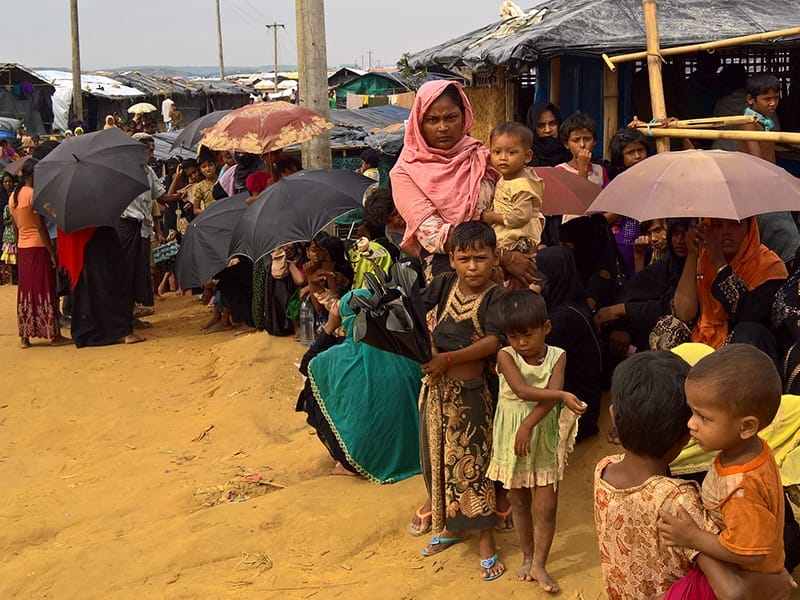
In a shack in one of the Rohingya refugee camps in Bangladesh, young children strive to learn the Quran and Arabic.
This school is one of only ways for refugees to enroll their children in “Field of Education” and to adapt to the conditions of the camps, which lack the most basic elements of life, after fleeing the violence practiced by the army in Myanmar against them and now they’re residing in this camp on the southeast coast of Bangladesh.
Some Rohingya refugees have found temporary jobs, including hunting and the sale of certain agricultural products in nearby markets, but the few amounts earned are largely to feed their families.
At the same time, more stories of violence faced by Myanmar’s Muslim minority Rohingya continue to stand out as the influx of refugees into Bangladesh continues unabated.
“They took all the beautiful girls, raped them and then left. On the same day we started our trip to Bangladesh, and we do not yet know what happened to our men there,” said Yasmin, 25.
Many women in refugee camps talk about rapes, killing of relatives, and then leaving without a family, where men are taken prisoner.
The Rohingya fled apartheid-like conditions in northwest Myanmar, where they have been stripped of citizenship since the early 1990s, and now there are at least 300,000 people who have crossed into Bangladesh, according to the Red Cross.
A UN report released last month said Myanmar security forces had committed mass killings and mass rapes to Rohingya which may “very likely” to amounted as crimes against humanity and possibly ethnic cleansing.